
SE-Fab V-Trace: Making Every Variant Traceable
TECHNICAL REPORT · SE-Fab V-TRACE
High-throughput enzyme screening can rapidly produce activity readouts for large numbers of variants. Traditional workflows sequence only a limited set of the top N high-activity variants, leaving the actual sequence identities of low-activity and inactive wells unresolved. This makes it difficult to determine which mutations account for differences in activity and which anomalous results warrant further examination.
To address this gap in sequence identity verification, Genoria introduces SE-Fab Variant Trace (SE-Fab V-Trace), a solution for variant traceability and verification. Built around dual-barcoded targeted amplicon sequencing, it combines plate-and-well mapping, per-well sequence analysis, and full-length sequencing of selected plasmids. This adds verifiable molecular identity evidence to existing automated enzyme screening workflows, supporting candidate selection, experimental quality review, and subsequent data-driven enzyme evolution. SE-Fab covers variant construction, transformation, single-colony picking, plate-based culture, expression and lysis, and high-throughput enzyme activity assays. V-Trace adds target-region sequence identification and links the measured sequences to their source plates and functional data.
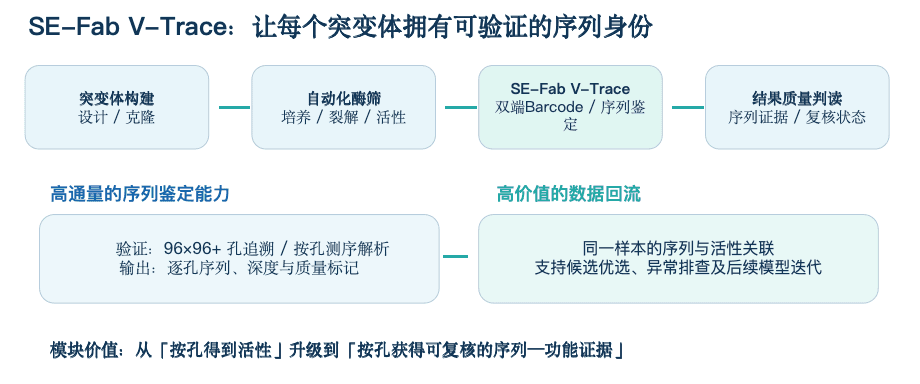
Figure 1 | The role and value of SE-Fab V-Trace in automated enzyme screening
01 | Why does high-throughput enzyme screening still need sequence verification?
Traditional directed evolution typically screens a library first, then uses Sanger sequencing to characterize a small number of promising clones. This approach works well for verifying priority candidates. However, as screening expands to multiple 96-well or even 384-well plates, sequencing individual clones requires more sample handling and sequencing operations. SE-Fab V-Trace uses combinatorial dual barcodes and pooled library sequencing to map sequence information from batches of variants back to their corresponding plates and wells, providing scalable sequence verification for high-throughput enzyme screening.
For data-driven protein engineering, finding high-activity variants is only part of the task: low-activity and inactive samples also have analytical value. Once their sequences are known, researchers can compare different variants under the same assay conditions, identify substitutions or combinations worth exploring, and recognize modification strategies that require caution. This depends on clear sequence identities, trustworthy functional data, and records of the mutational background and experimental conditions. The purpose of per-well sequence verification is therefore to give screening records a corresponding sequence identity, enabling candidate selection and anomaly investigation while expanding the design space available for subsequent analysis.
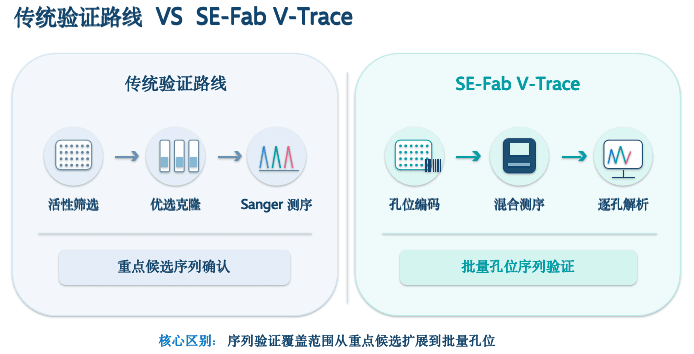
Figure 2 | Sequence coverage of traditional top N sequencing versus per-well sequencing
02 | Upgrading SE-Fab: Bringing sequence information into sample records
The existing SE-Fab workflow includes variant construction, transformation, single-colony picking, plate-based culture, expression and lysis, and high-throughput enzyme activity assays. At the plate-culture stage, SE-Fab V-Trace can use a small aliquot of culture for high-throughput pooled library preparation and sequencing. This step can run in parallel with the existing downstream SE-Fab workflow without requiring an additional sample-processing workflow. The resulting per-well sequencing data can then be analyzed alongside activity measurements.
The architecture comprises three complementary layers. At the sample layer, physical sample identifiers record samples, plate and well positions, and transfers, answering “Where did this sample come from?” At the sequencing layer, dual-barcode combinations map pooled sequencing data back to individual plates and wells. At the analysis layer, design versions, experimental batches, reference sequences, analysis batches, and phenotype records establish which parameters were used to produce each set of results.
SE-Fab V-Trace brings sample provenance, measured target-region sequences, and functional performance into a single evidence chain, providing a clear path for reviewing results and locating anomalies.
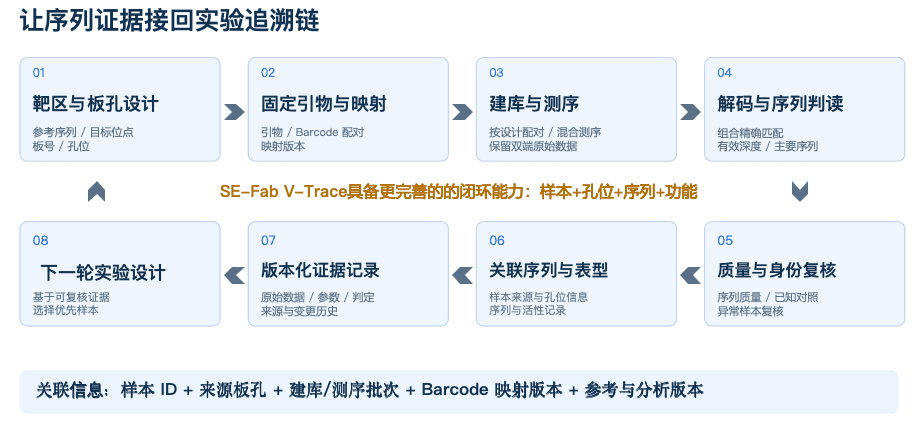
Figure 3 | Overview of the SE-Fab V-Trace sequence traceability loop
03 | Technical principles: Two-step PCR and dual-barcode encoding
Target regions and primer design
The reference sequence, amplification range, reading frame, and coordinates relative to the full-length protein are first defined according to the target mutation sites. The method separates the roles of inner and outer primers: inner primers amplify the target region specifically and introduce universal sequences, while outer primers carry dual 7 nt barcodes and sequencing-compatible sequences. Amplicons from different wells can therefore be pooled for sequencing while retaining independent barcode-based assignments. This two-step PCR and dual-barcode strategy draws on the method reported by Wittmann et al. [1] and has been implemented for automated plate-based workflows.
The strategy is suited to high-throughput verification of short target regions and specified mutation sites. When full-length genes or vector integrity need to be evaluated, full-length plasmid sequencing can provide additional evidence.
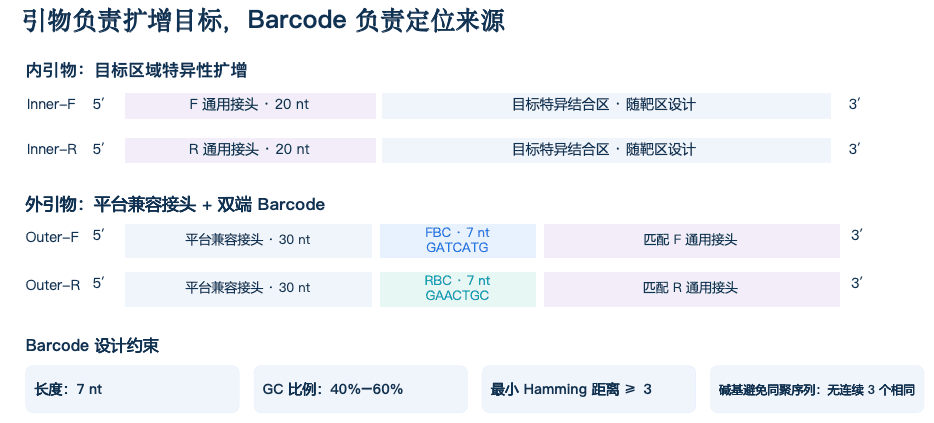
Figure 4 | Inner and outer primer structures and the roles of dual barcodes
Optimizing barcode combinations for automated plate workflows
The current design uses 96 forward and 96 reverse barcodes, each 7 nt long, giving 9,216 theoretical pairwise combinations. In principle, barcode length can be adjusted to suit the size of the variant library; the corresponding primers can be designed using the published PrimeGen primer-design platform [2]. In the first 96-well plate, forward and reverse barcodes are paired from matching positions. In the second plate, the forward barcode sources remain unchanged while the reverse barcode sources shift cyclically by column, assigning different barcode combinations to the same well position on different sample plates. Under these design rules, 12 plates of 96 wells can be configured, yielding 1,152 distinct well combinations.
Figure 5 illustrates a uniqueness check for 96 × 96 barcode combinations. For larger variant libraries, longer barcodes can be designed to accommodate plate formats with higher throughput.
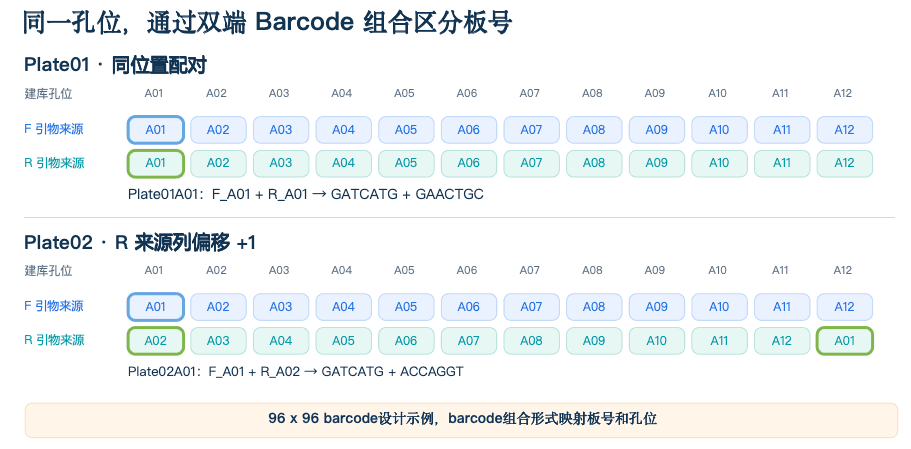
Figure 5 | Mapping plates and wells with dual barcodes
Recovering per-well sequences from pooled sequencing data
After sequencing, exact decoding of forward and reverse barcode combinations ensures accurate well assignment, followed by reference alignment, target-site interpretation, and quality analysis.
The per-well analysis report includes the dominant sequence, distinguishable mixed sequences, effective coverage depth, dominant-sequence frequency, and anomaly flags. For random or saturation mutagenesis libraries, the system directly reports the measured variant identities. For specified construction tasks, it automatically compares the designed and measured sequences for confirmation.
04 | Experimental validation: Recovering per-well sequence evidence from a pooled library
To evaluate the complete workflow on a real mutant library, a two-site saturation mutagenesis library targeting amino acid positions 485 and 486 of the target protein was selected. Dual-barcode library preparation and per-well bioinformatics analysis were performed on two 96-well plates, covering 192 wells in total. The validation spanned the complete process from plate-and-well encoding and pooled sequencing to read assignment, target-region alignment, and per-well quality analysis.
The experiment produced 11,419,483 pairs of 150 bp paired-end sequencing reads. Q30 values were 95.30% for Plate 1 and 94.24% for Plate 2. Using the corresponding combination map, all 192 designed wells received barcode assignment records, resolving the pooled data into independent sequence information traceable to the source plates and wells. Across all wells, the median number of effectively aligned read pairs was 25,139.5, demonstrating the workflow's ability to resolve sequences for batches of variants.
| Validation item | Result |
|---|---|
| Sequencing data | 11,419,483 pairs of 150 bp paired-end reads |
| Sequencing quality | Plate 1 Q30: 95.30%; Plate 2 Q30: 94.24% |
| Barcode assignment | Barcode decoding and well assignment completed for 192/192 wells |
| Current quality control | 181/192 wells passed per-well quality assessment (PASS), with sequence identities available for subsequent analysis |
| Effective alignment depth | Median of approximately 25,000 effectively aligned read pairs across all wells; 11 wells had no effectively aligned read pairs |
In this initial 192-well library validation, all wells received barcode assignment records. Effectively aligned reads were detected in 181 wells, or 94.3%; the remaining 11 wells had no effectively aligned reads. The current statistics use a count of effectively aligned read pairs greater than zero as the detection criterion, to assess the availability of per-well sequencing data.
The distribution of per-well sequencing depth makes differences in data coverage visible, helping researchers select candidate samples, arrange follow-up checks for anomalous wells, and optimize amplification and library preparation. For mixed sequences, activity data can inform whether to pick new single colonies for verification. For wells with low depth or no effectively aligned reads, researchers can investigate the sample template, primer matching, amplification, and library preparation, and perform independent sequencing when necessary.
Among the wells with no effectively aligned reads, Plate01-A12 and Plate02-A12 were selected for Sanger sequencing. Both samples contained long insertions in the region corresponding to amino acid position 485 of the target protein, potentially affecting targeted amplification and reference alignment. This result demonstrates the complementary value of per-well quality analysis and independent sequencing verification in identifying anomalous samples and guiding subsequent experimental optimization.
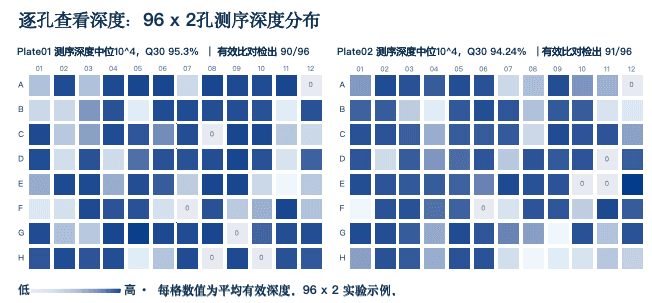
Figure 6 | Per-well effective sequencing depth across two 96-well plates
05 | Two layers of sequence verification: Balancing throughput and plasmid sequence completeness
SE-Fab V-Trace combines well-level targeted amplicon sequencing with full-length plasmid sequencing at the individual-clone level. The former focuses on verifying target-site sequences across batches of screening samples; the latter provides broader verification of the gene of interest, regulatory elements, and vector backbone for key candidates. These two types of evidence serve routine high-throughput traceability and confirmation at critical checkpoints, respectively.
| Technical layer | Primary use | Coverage |
|---|---|---|
| Targeted amplicon sequencing | Per-well variant identification, mixed-clone detection, and library composition analysis | Designed target regions across all 96-well plates |
| Full-length plasmid NGS | Full-length confirmation of key clones, detection of variants outside the target region, and verification of backbone integrity | Used as needed, covering the full-length gene and vector backbone |
In an independent full-length plasmid sequencing example, reports for all four test plasmid samples showed complete assembly against a 7,631 bp reference plasmid, with 100% identity to the reference and no detected SNPs, indels, or structural variants. Full-length plasmid sequencing has thus undergone end-to-end validation on standard samples—7,631 bp full-length assembly and 100% identity—and can provide further verification of key single-clone constructs.
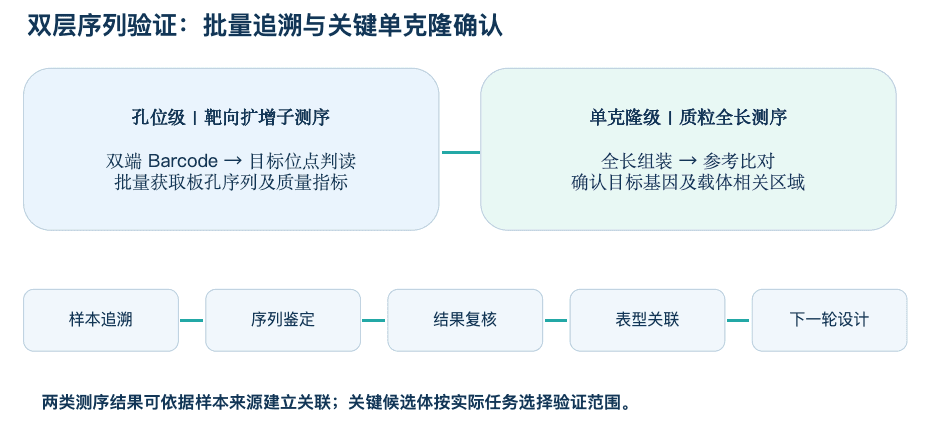
Figure 7 | Complementary verification through targeted sequencing and full-length plasmid sequencing
06 | From sequence traceability to reusable data assets
The value of SE-Fab V-Trace extends beyond identifying variant sequences. It turns sequence verification results into traceable, reusable experimental data that can inform process optimization and the next round of enzyme evolution design.
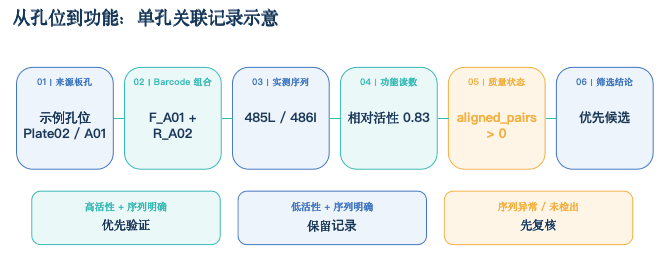
Figure 8 | Linking well provenance, barcode decoding, sequence information, activity readouts, and quality status for the same well
Tracing sequence anomalies back to process optimization. For samples with low coverage or no usable sequencing information, amplification, library preparation, and read assignment can help identify where to investigate. Wells containing mixed sequences can be examined alongside clone provenance records. Key candidate variants can undergo full-length plasmid sequencing to further confirm construct integrity. In this library validation, Sanger verification and independent experimental investigation of selected low-depth wells also informed subsequent optimization of sample quality, primer matching, and library construction.
Building data assets from sequence–function relationships. High-activity variants are a major objective of enzyme engineering, but reliably identified low-activity and inactive variants also have research value. Linking actual sequences to functional performance enables a more comprehensive analysis of amino acid substitution effects, interactions between sites, and the functional boundaries of an enzyme. For samples with unresolved identities, mixed clones, or insufficient quality, the system retains the original records and quality status so that subsequent analysis rests on reliable data.
On this basis, SE-Fab V-Trace establishes structured links among variant sequences, experimental wells, functional phenotypes, quality metrics, and analysis versions. These records support library coverage analysis, candidate variant selection, and review of anomalous samples, while providing data for subsequent experimental optimization and AI-assisted enzyme design.
As an integral part of the SE-Fab technology stack, V-Trace complements the existing Scientific Trace framework. V-Trace provides molecular sequence evidence for variants, while Scientific Trace records the execution of research tasks and the reasoning behind decisions. Together, they support traceable, iterative intelligent research workflows.
07 | Conclusion: Making every variant traceable
The SE-Fab V-Trace upgrade links sample provenance, measured sequences, activity readouts, and quality status into an evidence chain that can be revisited. Why a candidate was retained, how a record should be interpreted, and whether a well needs further review can all be grounded in evidence. Verified records then provide a direct basis for follow-up experiments and the next round of design.
Every variant deserves to be seen, verified, and traced.
Collaborate with us
Making every variant traceable is an important step toward accumulating reusable sequence–function data. We look forward to collaborating with teams working in enzyme engineering, high-throughput screening, and AI protein design. Across more real libraries and screening tasks, we aim to refine per-well sequence verification and its association with functional data, and explore how these records can support candidate selection, anomaly review, and the next round of experimental design.
Business inquiries: pr@genoria.ai
Tell us about your research area, screening scenarios, and the problems you would like to solve together.
Join us
Starting from the relationship between sequence and function, we aim to turn experimental data into scientific experience that AI can learn from and use, connecting molecular design, experimental validation, and continuous iteration to scale scientific discovery. If you want to explore the intersection of AI and the life sciences and help build self-evolving laboratories that continually accumulate experience, join Genoria in advancing Scale Agentic Discovery.
Careers: hr@genoria.ai
Send your résumé or project experience and tell us which technical problems you would like to help solve.
References
- Wittmann, B. J., Johnston, K. E., Almhjell, P. J., Arnold, F. H. evSeq: Cost-Effective Amplicon Sequencing of Every Variant in a Protein Library. ACS Synth. Biol. 11(3), 1313–1324 (2022). https://doi.org/10.1021/acssynbio.1c00592
- Wang, Y., Hou, Y., Yang, L., et al. Accelerating primer design for amplicon sequencing using large language model-powered agents. Nat. Biomed. Eng. 10, 338–353 (2026). https://doi.org/10.1038/s41551-025-01455-z
- Genoria. SE-Fab: Self-Evolving Foundry. https://www.genoria.ai/en/blog/se-fab-self-evolving-foundry
- Genoria. Scientific Trace: Making the Judgments of a Self-Evolving Laboratory Traceable. https://www.genoria.ai/en/blog/scientific-trace